Summer is prime time for backyard barbecues, longer evenings, and unfortunately, ant activity. Many homeowners are surprised to find ants showing up in kitchens, bathrooms, and other living spaces, even when the house appears clean.
The reality is that summer ant invasions are often driven by weather conditions and colony behavior rather than poor housekeeping. During periods of heat and dry weather, ants become more active and begin searching farther from their nests for food, water, and shelter. Understanding what draws them indoors can help you reduce activity before a small problem turns into a steady trail.
Why Summer Heat Pushes Ants Indoors
Ants are highly sensitive to changes in temperature and moisture. As outdoor temperatures rise, colonies require more food and water to support growing populations.
At the same time, natural resources become harder to find. Dry soil, evaporating puddles, and stressed vegetation can limit the water sources that ants normally depend on outdoors.
When conditions outside become harsh, homes offer a more attractive alternative. Indoor spaces provide stable temperatures, reliable moisture, and easy access to food. Even a well-maintained home can become a target when nearby colonies begin expanding their search area during the hottest weeks of summer.
Summer is also one of the busiest growth periods for ant colonies. More workers are sent out to forage, increasing the chances that scout ants will discover entry points around your home.
The Four Things Your Home Offers That Ants Cannot Find Outside
When ants move indoors, they are usually searching for one or more essential resources.
Food Sources
Ants do not need large amounts of food to establish a trail. Tiny crumbs, sugary residue, grease buildup, pet food, and food spills can all attract foraging ants.
Common food sources include:
- Crumbs under appliances
- Sticky drink spills
- Unsealed pantry items
- Pet food bowls
- Overflowing trash cans
- Overripe fruit left on counters
Some ant species prefer sweets, while others are drawn to proteins and fats. Once a scout ant finds a food source, it can quickly lead the rest of the colony back to it.
Reliable Moisture
Water becomes especially valuable during hot summer weather.
Many indoor moisture sources go unnoticed by homeowners, including:
- Dripping faucets
- Leaky pipes
- Refrigerator condensation
- Damp cabinets
- Plant saucers
- Pet water bowls
- Bathroom humidity
A small leak under a sink may not seem significant, but it can provide enough moisture to support ant activity for weeks.
Shelter From Extreme Conditions
Homes provide protection from heat, drought, and sudden weather changes.
Wall voids, crawl spaces, basements, and areas behind cabinets offer ants stable environments where they can travel safely or establish satellite colonies.
Certain species are particularly likely to nest near warm, humid areas within a structure, making indoor conditions even more appealing during the summer months.
Easy Access Points
Ants only need a tiny opening to enter a home.
Common entry points include:
- Foundation cracks
- Gaps around windows
- Door thresholds
- Utility penetrations
- Damaged weatherstripping
- Openings around pipes and cables
Many homeowners never notice these access points until ant activity becomes visible indoors.
How One Ant Becomes Hundreds
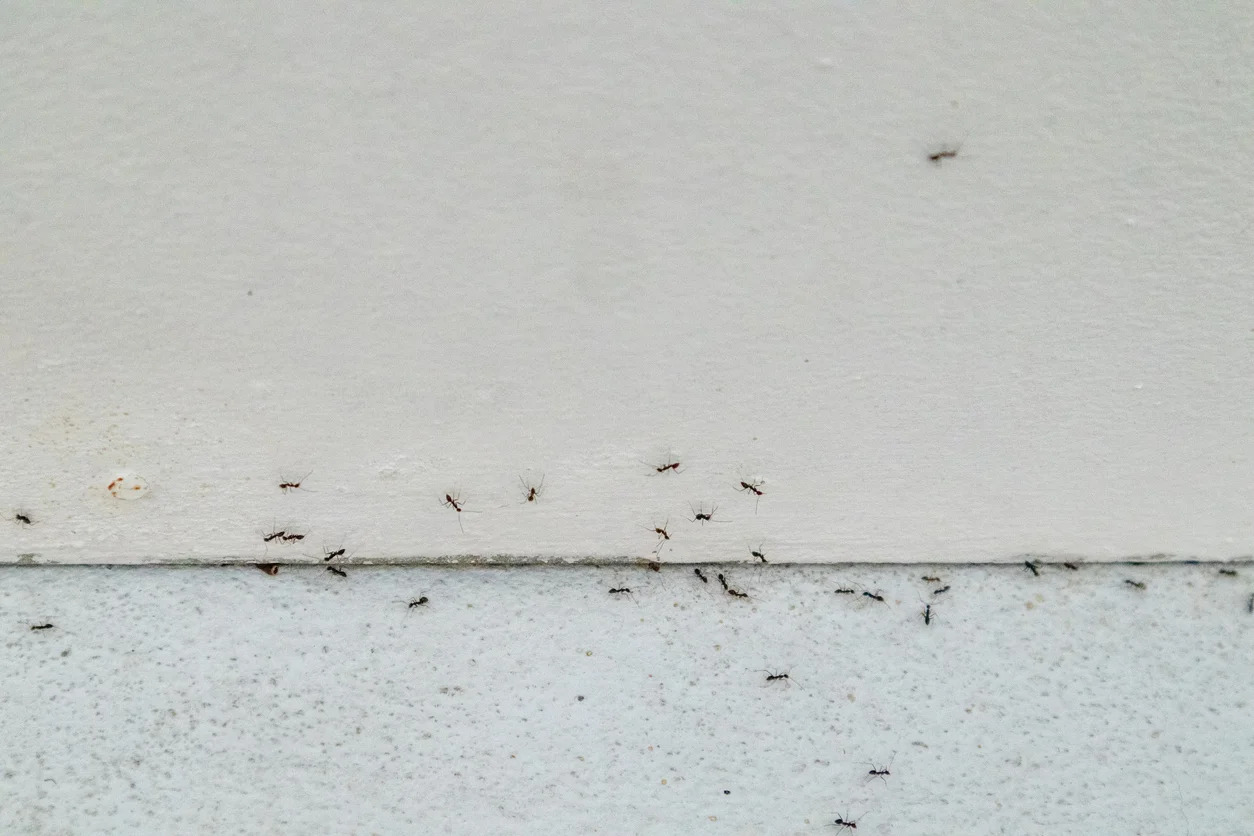
A single ant on the counter may seem harmless, but it often signals a larger issue.
Scout ants leave behind chemical scent trails called pheromones when they locate food or water. These invisible trails guide other ants directly to the resource.
As more ants travel the same route, the trail becomes stronger and easier for the colony to follow. That is why ant activity can seem to explode overnight. What starts as one or two ants can quickly become a steady line moving between a colony and a resource inside your home.
Simply spraying visible ants often addresses only the symptom. If the colony remains active nearby, new workers can continue finding their way indoors.
Which Areas of the Home Attract Ants Most Often?
Although ants can appear almost anywhere, certain rooms consistently attract more activity during summer.
Kitchens
Kitchens combine everything ants need in one location.
Food residue, crumbs, grease, water sources, and hidden spaces behind appliances create ideal conditions for foraging ants.
Pay special attention to:
- Under refrigerators
- Behind stoves
- Around dishwashers
- Pantry shelves
- Pet feeding areas
Bathrooms
Bathrooms typically attract ants because of moisture rather than food.
Leaky plumbing, damp towels, condensation, and humid conditions can create dependable water sources during dry summer weather.
Homeowners often notice ants near sinks, tubs, vanities, and toilets when moisture is the primary attractant.
Basements and Crawl Spaces
Basements and crawl spaces tend to remain cooler and more humid than outdoor conditions.
These areas often contain foundation gaps, plumbing lines, and other pathways that allow ants to move throughout the structure unnoticed.
Carpenter ants can be especially attracted to areas with ongoing moisture issues and damp wood.
Practical Ways to Make Your Home Less Attractive to Ants
Complete prevention is not always possible, but reducing access to food, water, and shelter can make a noticeable difference.
Address Moisture Issues
Start by eliminating easy water sources.
Repair leaking fixtures, improve ventilation in damp areas, and monitor places where condensation regularly forms.
If you have a basement or crawl space that feels humid throughout the summer, a dehumidifier may help create less favorable conditions for pests.
Store Food Properly
Food storage is one of the simplest ways to reduce ant activity.
Use sealed containers for pantry goods, clean up spills promptly, and avoid leaving pet food out for extended periods.
Regularly cleaning under appliances can also remove food residue that often goes unnoticed.
Seal Entry Points
Inspect your home's exterior for gaps and cracks.
Pay close attention to:
- Windows
- Doors
- Foundation walls
- Utility penetrations
- Garage doors
Sealing these openings can reduce the number of scout ants entering your home.
Reduce Outdoor Pressure
Conditions around the home can contribute to indoor activity.
Keep vegetation trimmed away from the structure, move firewood away from exterior walls, and avoid allowing mulch to build up directly against the foundation.
Reducing outdoor harborage areas can make your property less attractive to nearby colonies.
Eco-Friendly and Organic Approaches to Ant Control
Many homeowners prefer solutions that balance effectiveness with consideration for children, pets, and the surrounding environment.
Eco-friendly and organic pest control strategies often focus on identifying attractants, reducing conducive conditions, monitoring activity, and using targeted treatments only where necessary.
This approach addresses the root causes of ant activity instead of relying solely on repeated surface treatments.
When paired with proper sanitation and exclusion efforts, targeted treatments can provide longer-lasting results while minimizing unnecessary product use.
When Summer Ant Problems Keep Returning
If ants continue returning despite your efforts, there may be a larger colony nearby or hidden nesting activity within the structure.
Recurring ant problems often involve:
- Multiple colonies
- Satellite nests
- Hidden wall void activity
- Persistent moisture sources
- Repeated outdoor pressure
Because different ant species behave differently, accurate identification and targeted treatment are often key to long-term control.
Keeping Summer Ant Activity Under Control
Hot summer weather naturally increases ant activity, making homes more attractive sources of food, water, and shelter. While simple prevention steps can reduce the chances of an infestation, recurring trails often point to a larger issue that requires a more thorough approach.
If ants continue showing up around your home, professional ant control can help identify nesting locations, eliminate active colonies, and address the conditions that attract ants in the first place. TriGuard Pest Control offers customized pest control programs, including monthly, bi-monthly, and quarterly service options, along with eco-friendly and organic treatment solutions.
If summer ants keep finding their way indoors, it's time to identify what's attracting them in the first place. Call (208) 565-2416 or visit us online to schedule your inspection.