
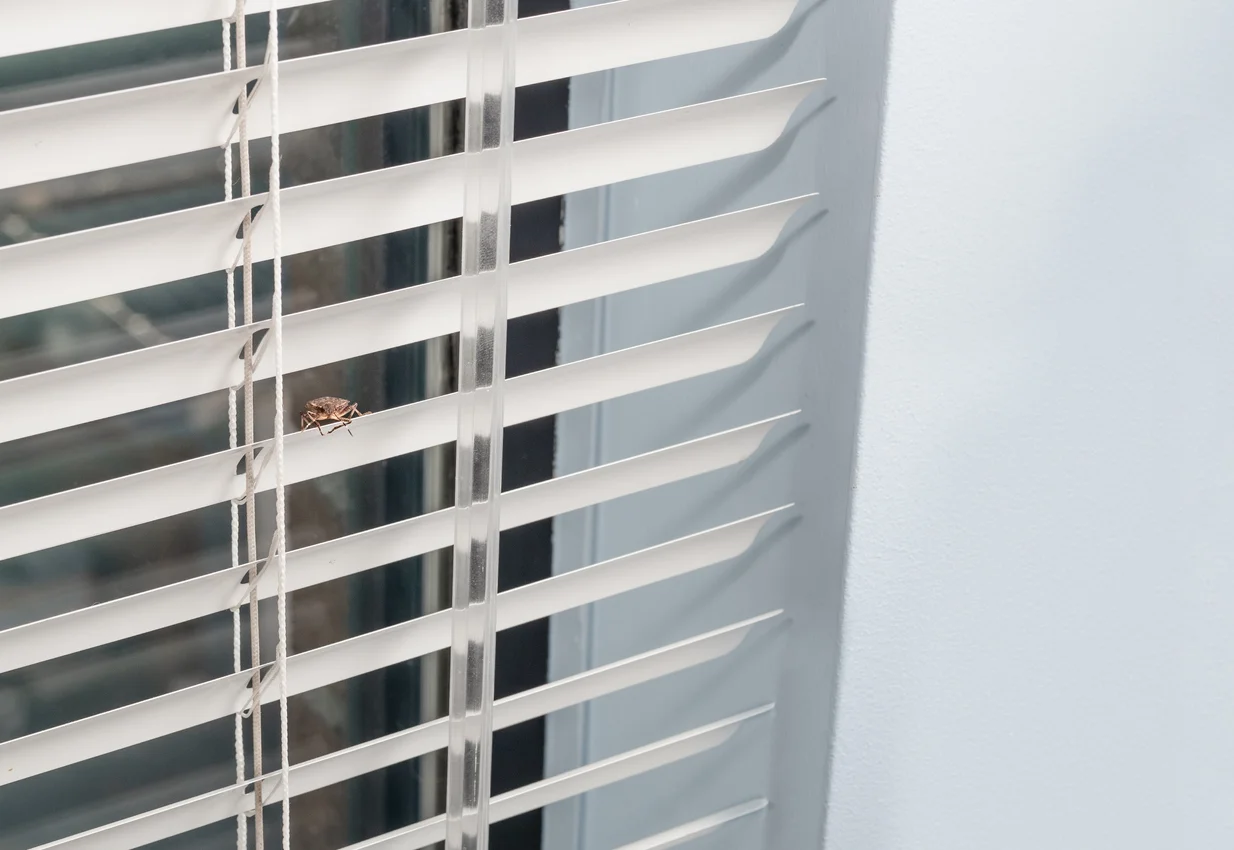
Many homeowners are surprised when stink bugs start appearing on walls, ceilings, and windows during late summer and fall. The natural assumption is that the insects somehow found a way to invade the house overnight.
In reality, stink bugs don't create openings. They take advantage of gaps, cracks, and vulnerabilities that already exist around the structure. By understanding where stink bugs typically enter, homeowners can often reduce indoor activity before the bugs settle in for the colder months.
Why Stink Bugs Try to Get Inside
Unlike ants or rodents, stink bugs aren't coming indoors in search of food.
As temperatures begin to cool, brown marmorated stink bugs look for protected spaces where they can spend the winter. Homes provide stable temperatures and countless hiding places inside walls, attics, crawl spaces, and other sheltered areas.
Once a few stink bugs discover a suitable location, others often follow. That's one reason infestations can seem to grow larger each year if entry points remain unaddressed.
The biggest migration indoors usually begins in late summer and continues through fall, making prevention most effective before temperatures start dropping.
Windows and Doors: The Most Common Entry Points
When homeowners ask where stink bugs are getting in, windows and doors are usually the first places worth checking.
Small openings around frames can be enough for stink bugs to squeeze through, especially as weather stripping ages or screens become damaged.
Common problem areas include:
- Torn window screens
- Loose screen frames
- Worn weather stripping
- Gaps around door frames
- Damaged door sweeps
- Openings beneath exterior doors
If you can see daylight around a window or door, insects may be able to use the same pathway.
Rooflines, Attics, and Vents
Some of the most overlooked entry points are located high on the home.
Stink bugs are often attracted to warm, sunlit surfaces and frequently gather near rooflines before searching for openings.
Areas worth inspecting include:
- Soffits
- Fascia boards
- Ridge vents
- Gable vents
- Attic vents
- Chimney flashing
Because these areas aren't part of most homeowners' routine maintenance checks, they often become repeat access points year after year.
Utility Openings Around the Home
Any location where a pipe, cable, or utility line enters the structure can create opportunities for pests.
Over time, caulking and sealants naturally deteriorate. Even small gaps around service lines may provide enough room for stink bugs to enter wall voids or attic spaces.
Pay attention to:
- Water lines
- Outdoor faucets
- Cable lines
- Electrical conduits
- Dryer vents
- HVAC penetrations
These openings are easy to overlook because they're often hidden behind landscaping or exterior equipment.
Entry Points Homeowners Frequently Miss
Not all stink bug entry points are obvious.
Cracks Along Sun-Facing Walls
Stink bugs are naturally drawn to warmth. South- and west-facing sides of the home often receive the most afternoon sun, making them common gathering areas before fall.
Small cracks in siding, trim, and exterior joints on these walls may attract more activity than similar openings elsewhere.
Window Air Conditioning Units
Temporary window AC units often leave gaps around the frame.
Even when insulation panels are installed, small openings frequently remain around the sides, top, or bottom of the unit. These spaces can provide direct access indoors during stink bug season.
Items Brought Inside
Not every stink bug walks through a crack.
Some enter as hitchhikers on:
- Firewood
- Delivery boxes
- Outdoor furniture cushions
- Gardening supplies
- Reusable shopping bags
This is especially common during peak fall activity when stink bugs are actively searching for shelter.
How to Inspect Your Home Before Stink Bug Season
Finding potential entry points is easier when you know where to focus.
A good inspection starts outside.
Walk slowly around the perimeter of your home and look for:
- Cracked caulking
- Loose trim
- Damaged screens
- Unsealed utility penetrations
- Gaps around windows and doors
- Openings near rooflines
Late summer is often the ideal time for these inspections because stink bugs are beginning to search for overwintering locations but haven't yet moved indoors in large numbers.
Practical Ways to Reduce Stink Bug Access
Complete exclusion isn't always possible, but several maintenance steps can significantly reduce the number of bugs entering the home.
Seal Exterior Gaps
Use quality exterior caulk around:
- Windows
- Door frames
- Utility penetrations
- Siding joints
- Foundation cracks
Even relatively small openings can become recurring entry points.
Repair Screens and Weather Stripping
Replacing damaged screens and worn weather stripping is one of the most cost-effective ways to reduce pest access while improving overall energy efficiency.
Adjust Exterior Lighting
Bright white lights near doors and entryways can attract various insects.
Switching to warmer or yellow-toned bulbs may help reduce nighttime insect activity around key access points.
Address Problems Early
The sooner entry points are identified, the easier they are to correct.
Waiting until stink bugs are already appearing indoors often means many have already settled into hidden spaces throughout the structure.
Stop Stink Bugs Before They Settle In
Stink bugs rely on existing gaps and openings to enter homes. By focusing on windows, doors, rooflines, vents, and utility penetrations, homeowners can significantly reduce the opportunities these pests have to move indoors.
If stink bugs continue appearing despite your prevention efforts, professional pest control can help identify overlooked entry points and provide targeted exterior treatments before seasonal activity peaks. TriGuard Pest Control offers customized pest control programs designed to address seasonal pests like stink bugs and help keep homes protected year-round.
The best time to stop stink bugs from getting indoors is before they find a way in. Call (208) 565-2416 or fill out our form to schedule an inspection.