



Table of Contents
Wolf spiders are common in many parts of the United States. These fast hunters often surprise homeowners because they move quickly and look large. While their appearance can be intimidating, understanding their behavior helps you manage them more confidently. This guide covers wolf spider size, behavior, lifespan, and bite risks. It also explains how to prevent them from entering your home and what steps support long-term spider control.
What Wolf Spiders Look Like
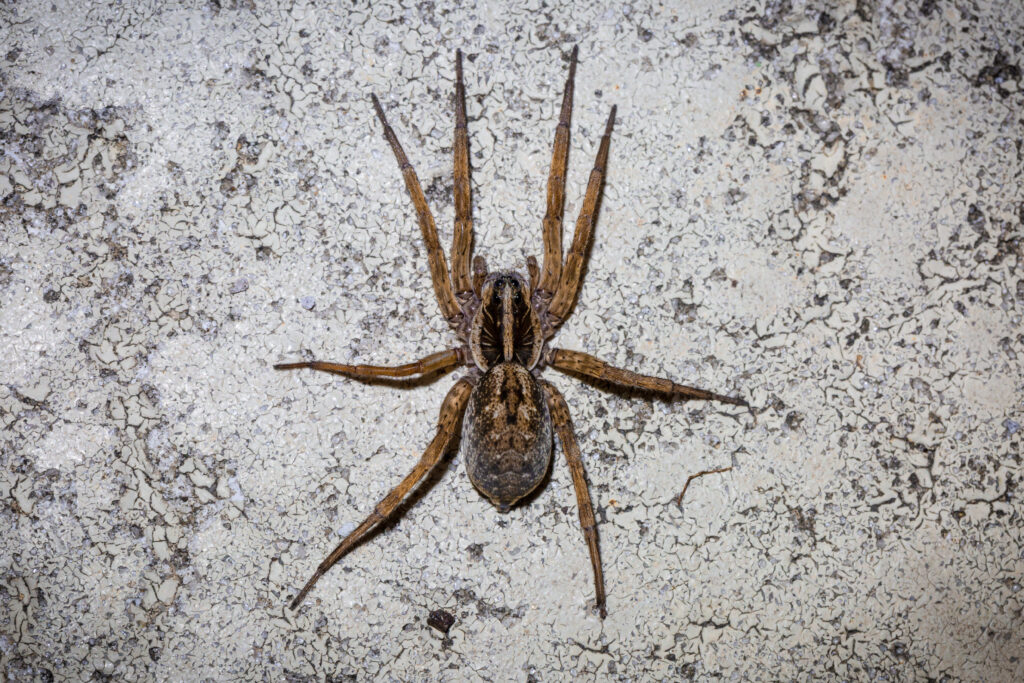
Wolf spiders come in several species, but they share a few traits. Most have stout bodies and strong legs. They range in color from gray to dark brown. Many show subtle striped patterns that help them blend into soil and leaves. Their eyes also stand out because they have eight arranged in three rows, with two large, reflective eyes in the middle.
Here are the main features to look for:
- Stout bodies with strong, fast-moving legs
- Gray, brown, or mixed coloring with subtle stripes
- Eight eyes arranged in three rows
- Reflective middle eyes that shine in light
- Size ranging from 0.4 to 1.4 inches
Their speed and low posture make them look bigger than they are. They move quickly across floors, patios, and garages as they search for prey.
Where Wolf Spiders Live
Wolf spiders do not build webs to catch food. Instead, they hunt insects on the ground and seek places that offer cover. Their preferred habitats include:
- Loose soil, grass, and leaf litter
- Areas under stones, logs, or outdoor debris
- Dark, quiet corners around yards and foundations
Outdoors, they help control insect populations. Indoors, they usually enter by accident. Common indoor hiding spots include:
- Basements and utility rooms
- Garages and storage spaces
- Gaps behind boxes and cluttered items
They tend to stay close to the floor and avoid people when possible.
Wolf Spider Behavior
Wolf spiders hunt by sight and speed. Their eyesight is better than most other spiders. They react quickly to movement and chase prey instead of waiting in webs. This active hunting style explains their sudden dashes across the floor.
Females carry their egg sacs on their bodies. After hatching, spiderlings ride on their mother’s back for several days. This unique behavior often surprises homeowners. While the sight looks alarming, these spiders remain focused on survival and do not act aggressively toward humans.
Wolf Spider Bite: What to Expect
Many people worry about wolf spider bites. These spiders do have fangs, yet they rarely use them on humans. They avoid confrontation and run when disturbed. Most bites happen only when a spider is trapped against skin.
A wolf spider bite usually causes mild redness and irritation. Swelling may occur, but severe reactions are uncommon. Symptoms fade within a few days. Still, it is wise to clean the area with soap and water. Apply a cold compress to reduce swelling. If symptoms worsen, contact a medical provider to rule out infection.
Wolf Spider Lifespan and Growth
Wolf spiders live longer than many other common house spiders. Most survive one to two years. Females often outlive males. They mature in late spring or early summer. Once adults, they focus on hunting and reproduction. Their lifespan depends on food availability, climate, and shelter.
Because they grow through a series of molts, young wolf spiders shed their exoskeleton several times. Each molt allows them to increase in size. This growth process continues until they reach adulthood.
Why Wolf Spiders Enter Homes
Wolf spiders usually enter homes for three reasons: food, shelter, or accidental movement indoors. They explore gaps around windows, door frames, and siding. They also slip under garage doors that do not seal well.
Homes with high insect activity attract wolf spiders. If they find crickets, flies, or ants inside, they tend to stay. Cluttered areas also attract them because they offer hiding spots. Storage rooms, utility spaces, and basements provide dark corners that keep them safe.
How to Prevent Wolf Spiders
Effective spider exclusion reduces wolf spider activity indoors. Simple steps make your home less appealing and limit entry routes. Here are key prevention methods:
- Seal cracks and gaps around the foundation
- Repair damaged screens
- Add or replace weatherstripping on exterior doors
- Close openings around cables, vents, and pipes
- Reduce clutter indoors and outdoors
- Vacuum corners, baseboards, and storage areas regularly
- Limit outdoor lighting to reduce insect activity
These improvements block spiders and reduce access for other insects. Professional pest control also plays a major role. When insect activity drops, wolf spiders have fewer reasons to enter.
Wolf Spiders vs. Other Spiders
Wolf spiders often get confused with other species. They may seem similar to brown recluse spiders, yet their eye pattern and body shape differ. Wolf spiders have two large, reflective eyes that make them easy to identify with a flashlight. Brown recluse spiders have a violin-shaped mark and much smaller eyes.
They also differ from web-building species. Orb weavers, for example, create large circular webs. Hobo spiders are another species often mistaken for wolf spiders, but they have different body shapes and behaviors that make proper identification important. House spiders spin messy webs in corners. Wolf spiders remain on the ground and hunt actively. Their behaviors make them more visible and more likely to appear in open spaces.
Do Wolf Spiders Cause Infestations?
Wolf spiders do not create typical infestations. They do not gather in groups or build shared nests. When you see several in a short period, it usually indicates a strong insect population nearby. High humidity, clutter, or unsealed entry points may also contribute.
Because they travel alone, you normally deal with individual spiders rather than colonies. This makes prevention easier with consistent cleaning and sealing strategies.
Expert Spider Control Near You
Wolf spiders may look intimidating, yet they play an important role outdoors. Still, no one wants them inside. Understanding wolf spider size, behavior, and lifespan helps you manage them with confidence. Simple prevention steps protect your home and reduce unwanted encounters.
If you want reliable protection and professional guidance, TriGuard Pest Control is here to help. Our experts offer effective spider control and exclusion services that keep your home safe and comfortable.
Contact TriGuard Pest Control today for service in Boise ID, Portland OR, Seattle WA, Denver CO, or Tri-Cities WA.